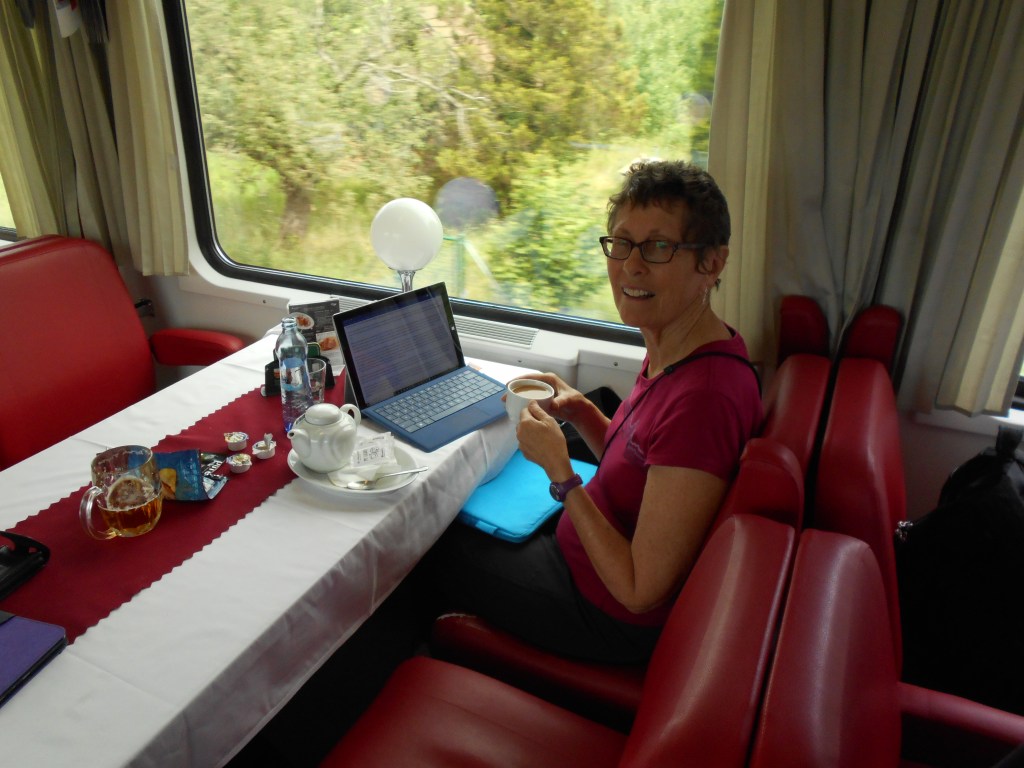
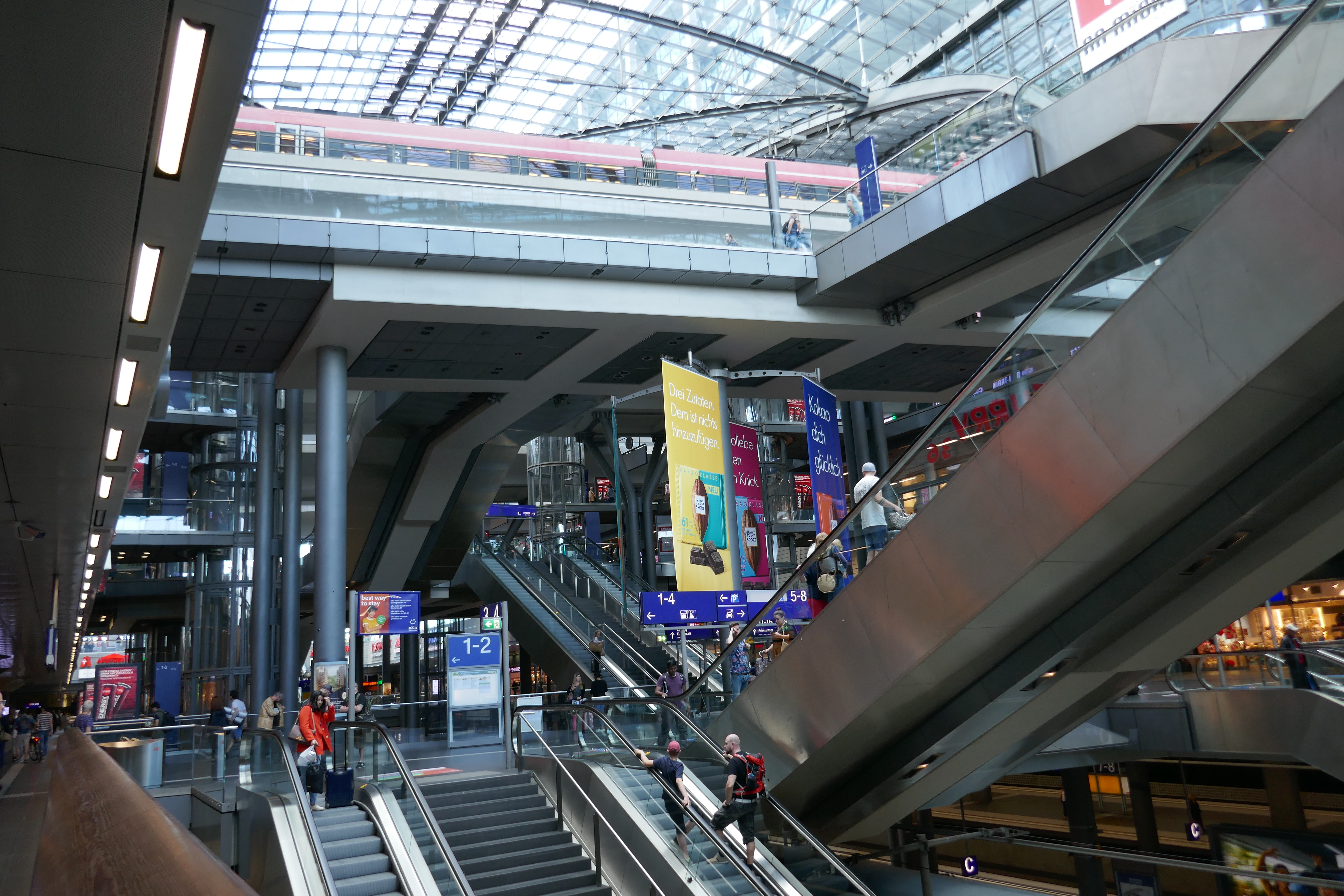
From Prague, we travelled to Berlin along the beautiful Elbe River, arriving at the Hauptbahnhof, Berlin’s enormous new central rail station. It’s a city in itself – multiple layers of intercity rail platforms, criss-crossed with local light rail. Escalators, shops, lifts, and people everywhere. Like most of Europe’s 19th – 20th Century city stations, it has a glass roof, but this one is sharply crystalline, and arcs about 10 stories overhead. Arriving at the Hauptbahnhof would be overwhelming if this weren’t Germany – but because it’s Germany it’s logical and easily navigated once you recover from the initial shock of its size. Deutsche Bahn rocks!
By choice, I would have bypassed Berlin entirely on our way north to Scandinavia. But it was too long a journey, and there’s no point travelling at night. I have such sad memories of visiting Berlin 25 years after the end of WWII. It was a profoundly unhappy place, divided and grey. The Allies were in occupation, and no one was interested in rebuilding the city. It still stood ruined, as retribution. Rubble-filled craters and wrecked buildings were everywhere, and those buildings still standing were pock-marked with bullet and shrapnel holes.
But it was the Wall that really dominated and debased Berlin. An awful no-man’s land of desperately divided families and neighbours; a floodlit death-field snaking its way through over 300 Berlin streets. And the beautiful Brandenburg Gate stood, blackened, in a no-man’s land between the GDR and West Germany. I have no photographs – at that time they were forbidden.
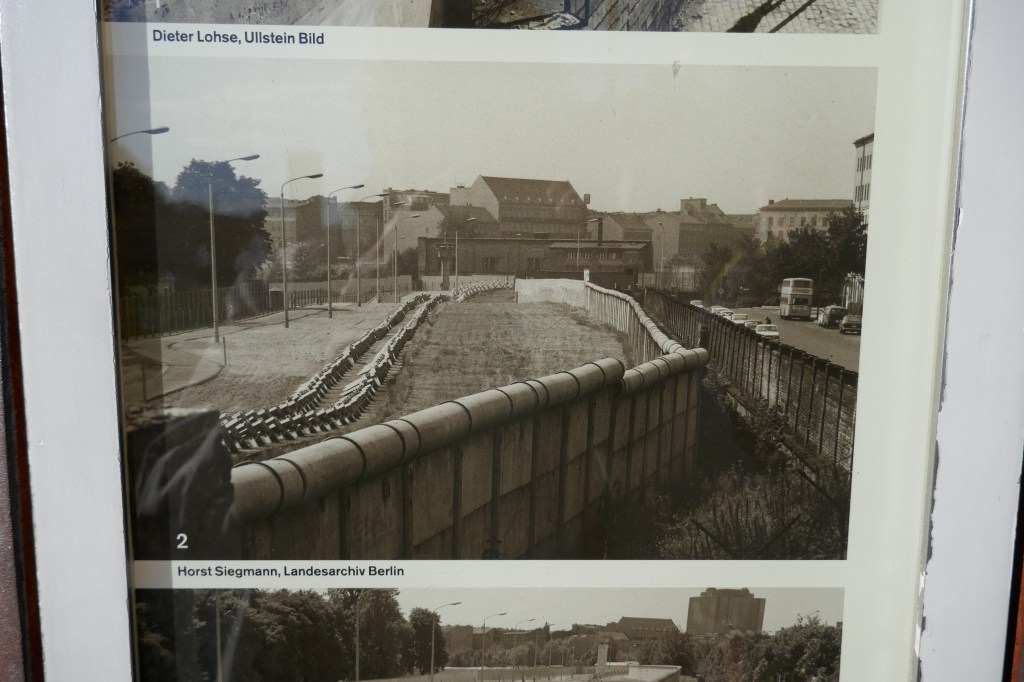
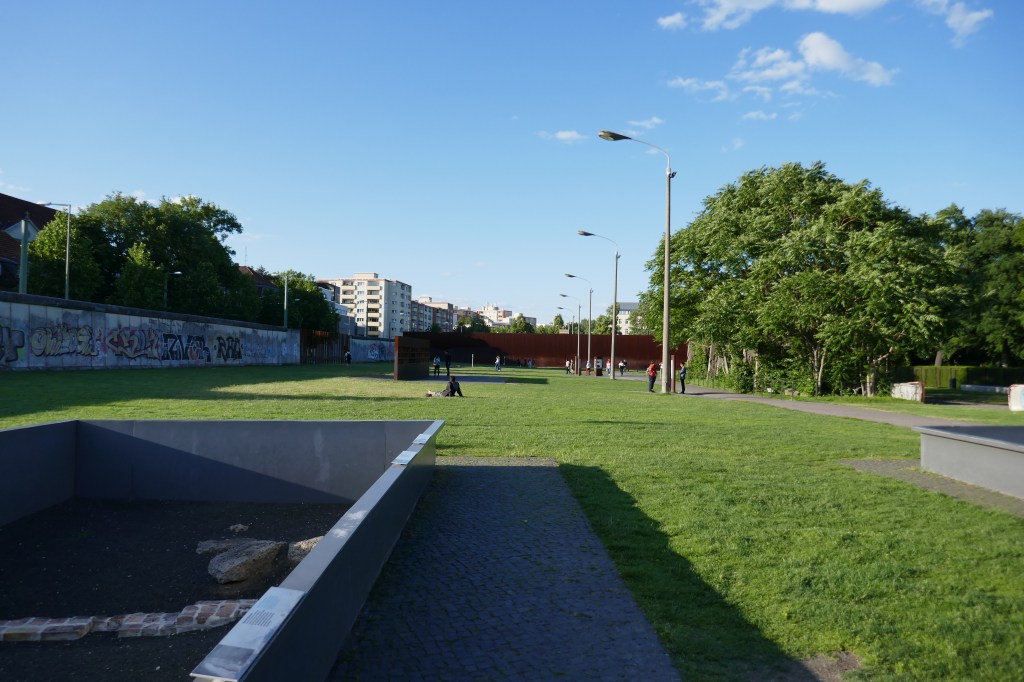
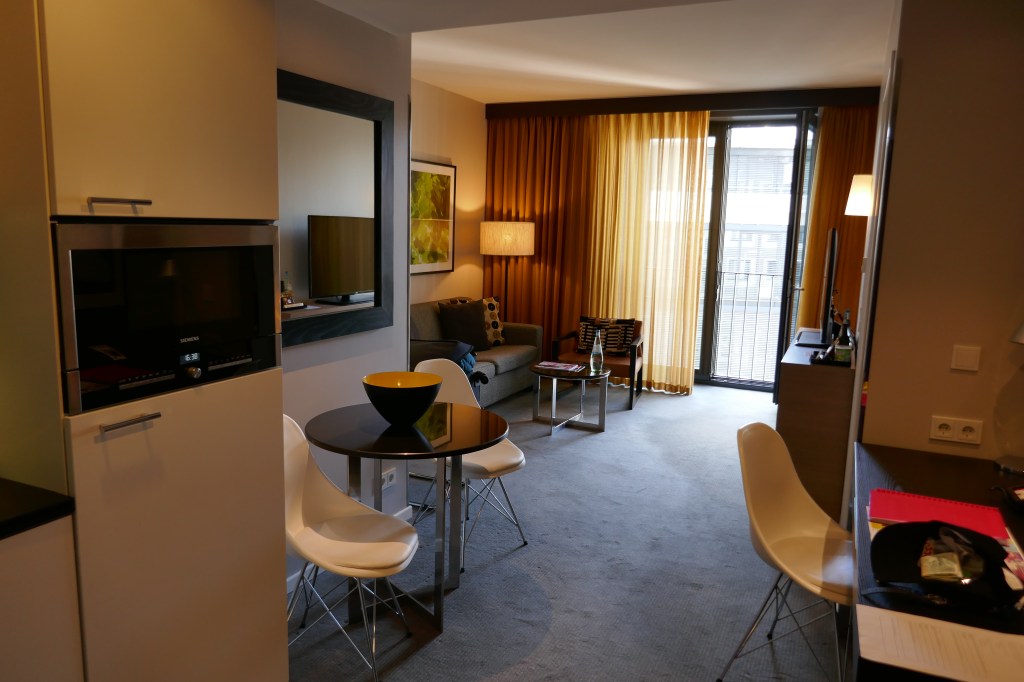
This time, we stayed in a spacious apartment in Berlin Mitte in the former East Germany, not far from the Berlin Wall Memorial which preserves one of a few remaining wall sections. This section of the Wall is unique in that it still visibly divides the street.
I’m now so glad we stayed a couple of nights and saw the new Berlin. Germany is a modern European powerhouse, and Berlin reflects that. It’s been rebuilt and renewed. Interestingly, however, bullet holes still pock-mark the facades of many older buildings. If you didn’t know they were there, you’d never notice. When I first showed some to Ian, however, he started noticing that they concentrate around doorways and windows – each now a silent memorial to intense and desperate street fighting just before the fall of Berlin.
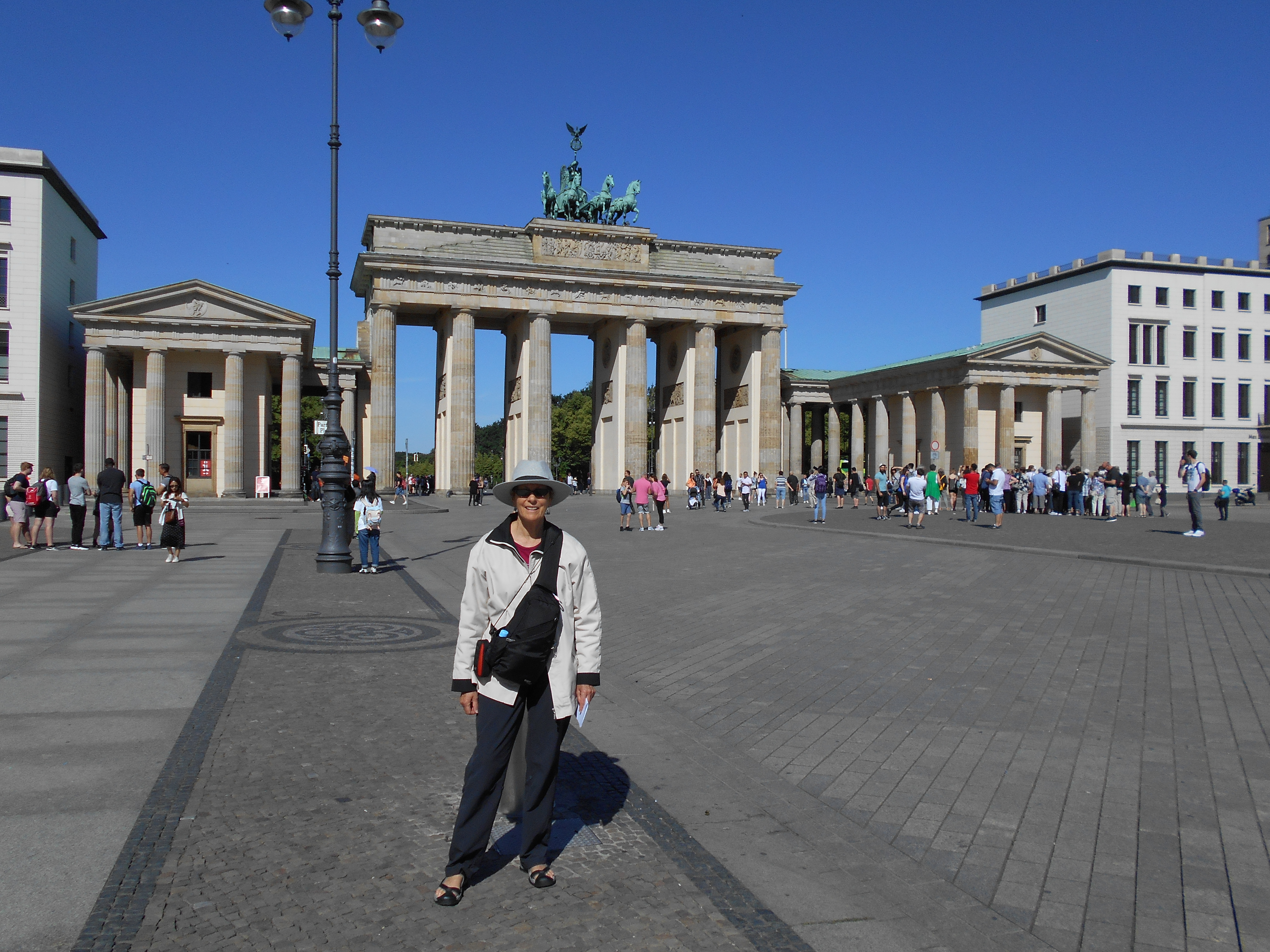
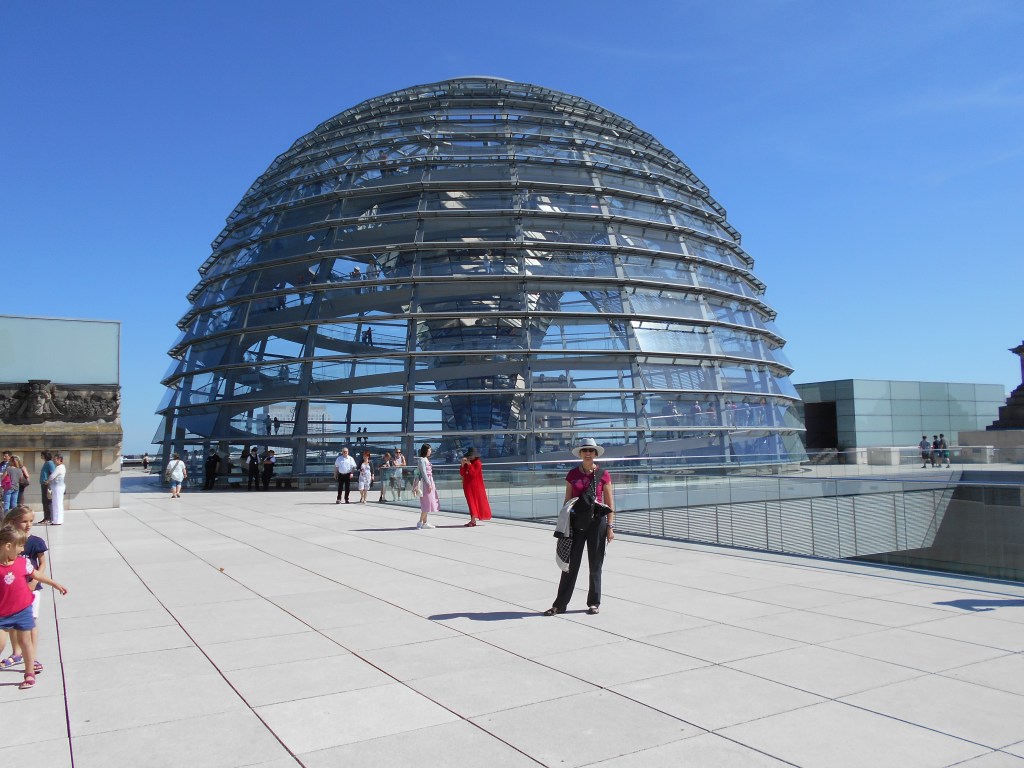
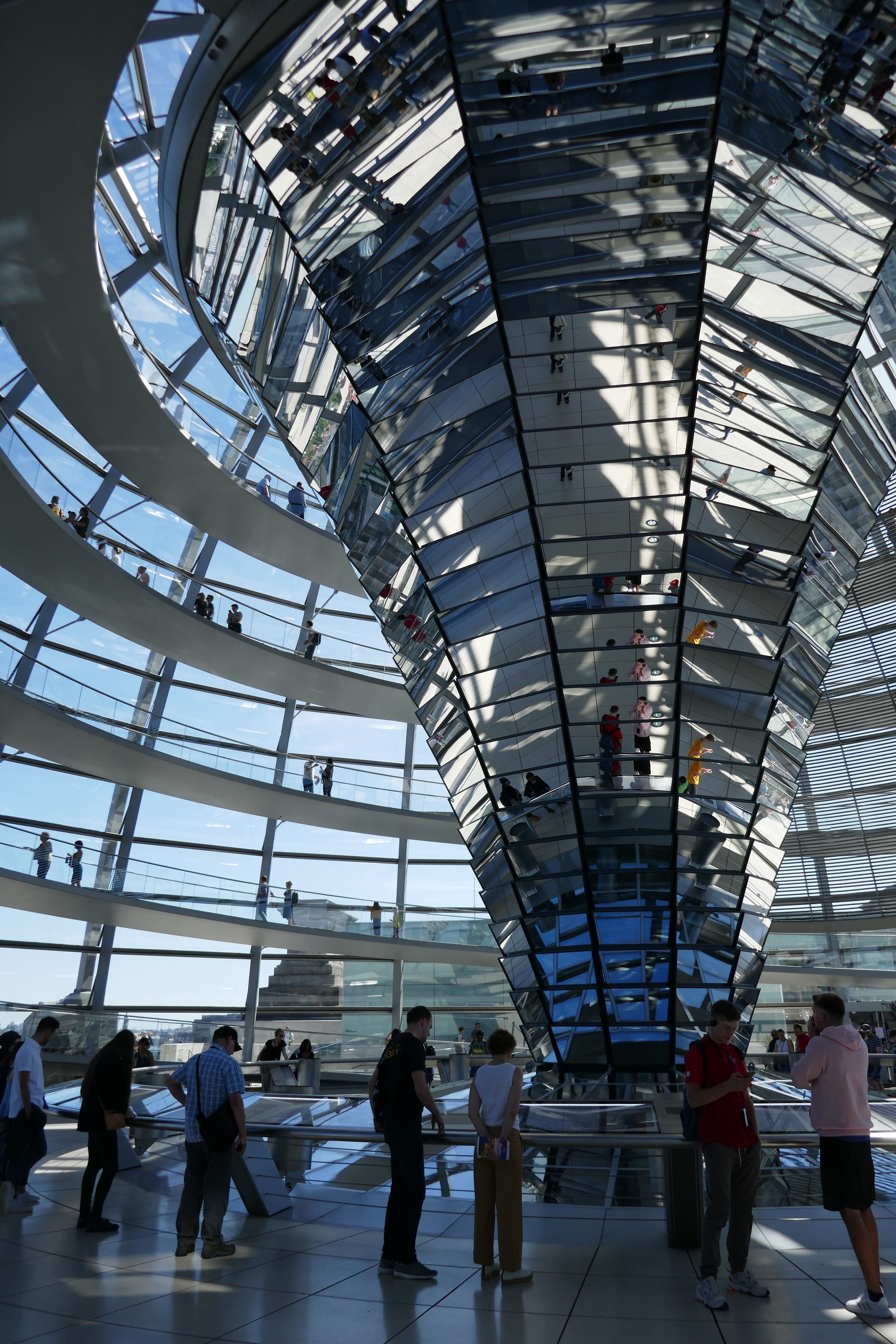
We started our day at the Brandenburg Gate, and then visited the Reichstag building, climbing to the top of the enormous glass dome which now crowns the building. There are panoramic views across the city in all directions and views over rooftops, every one gleaming with solar panels. Ian had been looking forward to seeing this aspect of the new Germany, and how a country with meagre sunlit hours (compared to ours) has so totally committed to using solar energy. The new glass dome itself acts as a solar generator, with mirrors that track the sun and direct it into the National Bundestag chamber below to save lighting costs. A huge hole in the top of the dome acts as a heat exchange to reduce reliance on central heating and cooling.
From there, we walked the brief distance to the Holocaust Memorial, a field of 2,100 concrete stele representing the millions of Jewish people murdered before and during WWII. I found it difficult to feel the symbolism until we walked deep into the rows of stele, where they tower overhead like a ghetto laneway, oddly angled, narrow and dark. And oppressive.
That evening, I’d pre-booked a concert at the Berliner Konzerthaus, my special treat for the trip. A Beethoven piano concerto followed by the almighty bang-crash-whollopy-thump of the Mahler ‘Titan’ Symphony. Biggest orchestra I have ever seen – what a crowd. Ian counted 120 musicians, but thinks there may have been more. What an amazing noise! I was sitting next to a young woman, a Berliner, and at the end we were both so excited we’d clasped hands and she was jabbering at me in German, whilst I jabbered back in English. Wunderbar! Then, an old lady from Potsdam sitting behind us did the same. From what I could understand of her German, she’d travelled all the way from Potsdam just to see the concert. Unforgettable.
 Europe 2019
No more tea for Sue. 🙂 sounds like the weather has lifted. Not so here, huge storms. Enjoy Germany. Stock up on beauty products and alcohol….so cheap
LikeLiked by 1 person
Sharing your trip is truly wonderful….enjoying it immensely.
No tea !! Nooo. Haha. My experience of Germany and Austria is…they don’t make good tea…a giant vase of black weak tea served with lemon.
All good here on the home front….lots of rain and a bit wild at times but no damage.
LikeLiked by 1 person