At the tip of its mainland and coastal islands, and before it takes off for Svalbad in the High Arctic, Norway curls fully eastward, wrapping itself around the very top of Europe towards Russia and Siberia.
So much so that Norwegian ports east of Hammerfest are further east than Istanbul, and the port of Kirkenes is only 15kms from the Russian border.
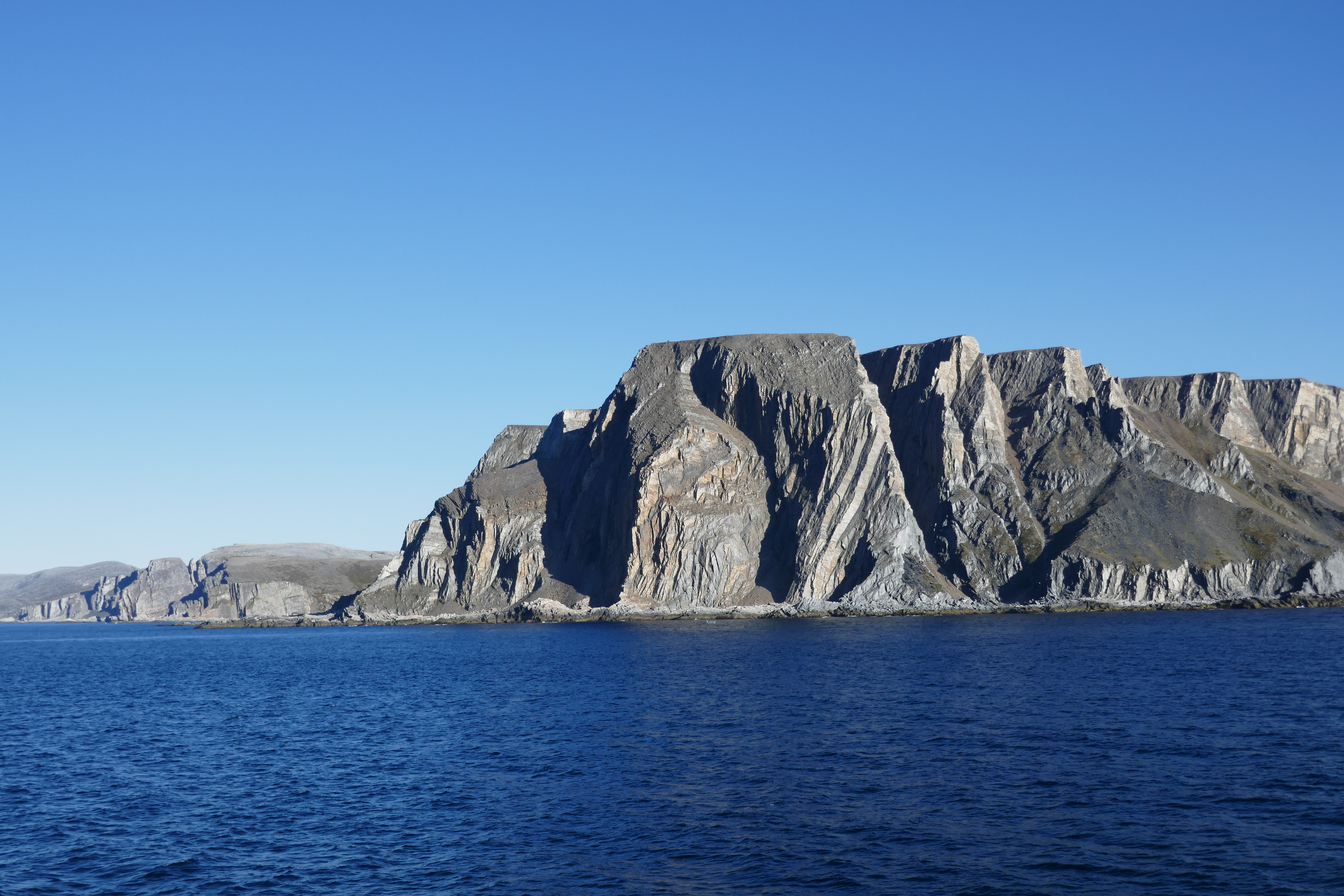
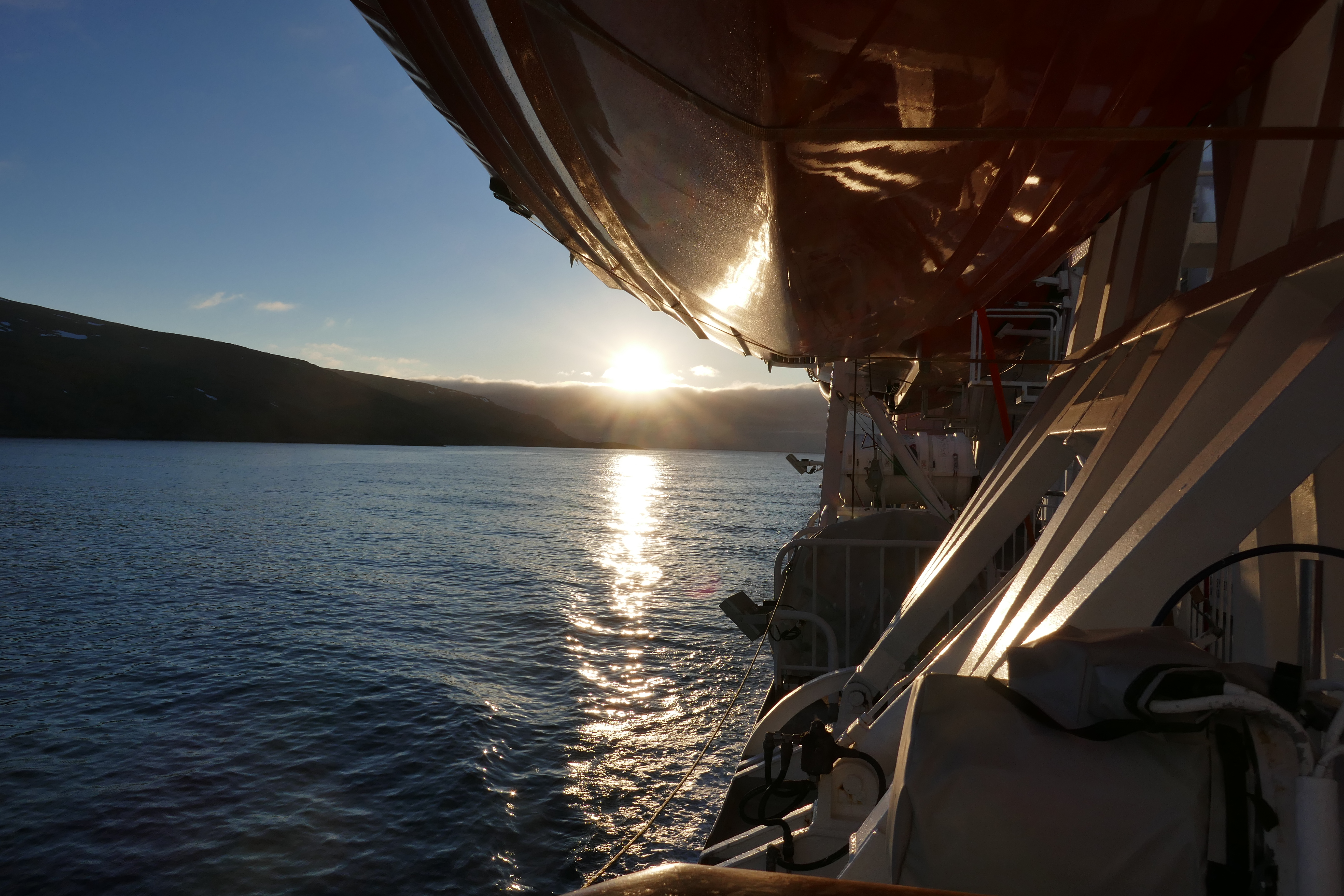
The spectacular fjords of southern and central Norway gradually give way to bare rocky, treeless landscapes, low-sided fjords, and lots of grazing reindeer. Fishing and offshore oil and gas reign supreme here, and I expected these isolated municipalities in Finnmark, Norway’s largest but least populated region, to be pragmatic and parochial.
Wrong!
The Travel Gods gave us a beautiful morning in Kirkenes, Hurtigruten’s final northern port. We walked into town, expecting (as we had before, and would again) a functional but not pretty townscape. Wrong! A little central mall welcomed us with, somewhat incongruously, a traditional wooden Chinese Gate. Hmmm – Sister City gift, perhaps? Wrong! Read about it in the following photo set (the image may need enlarging).
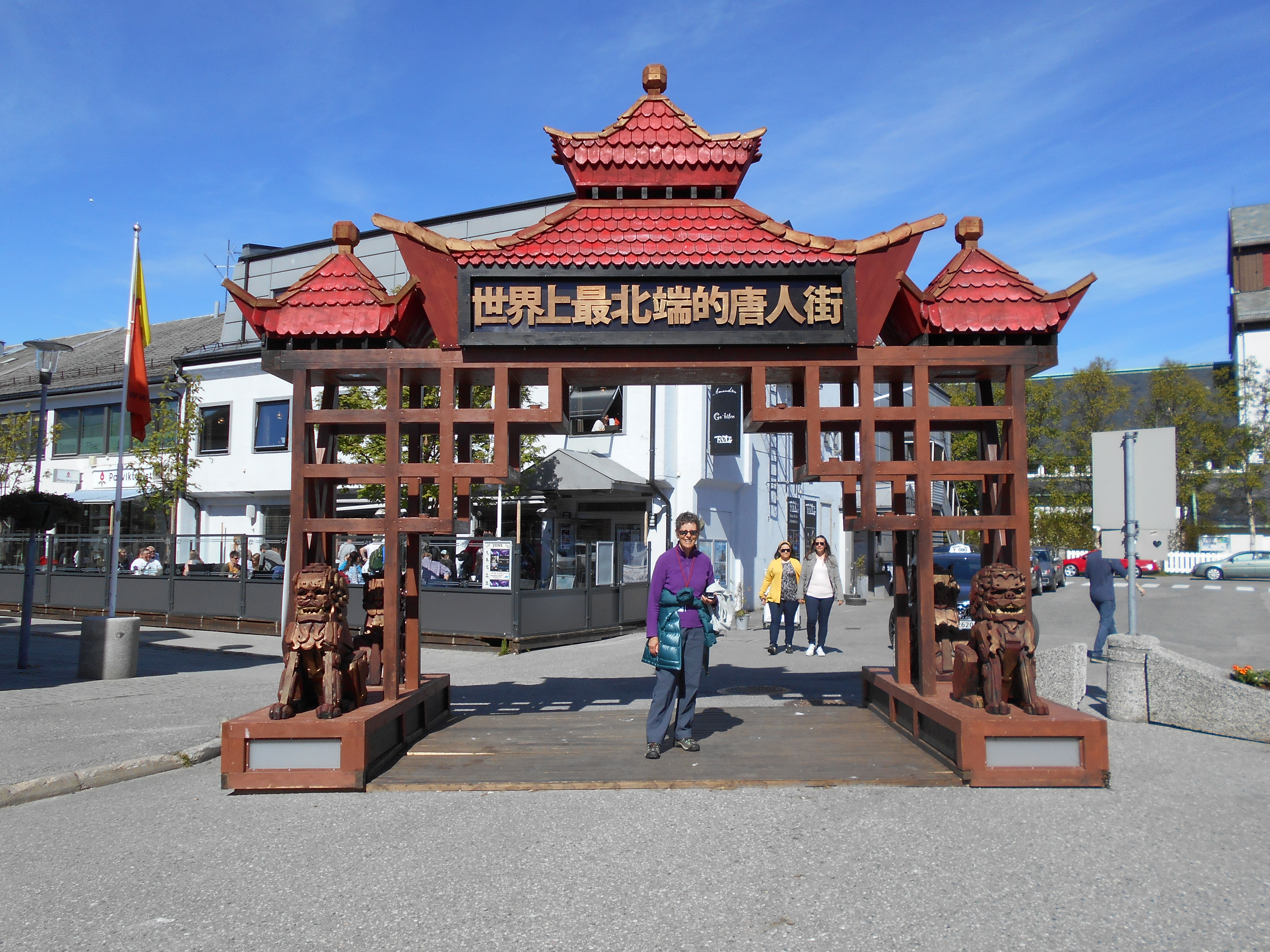
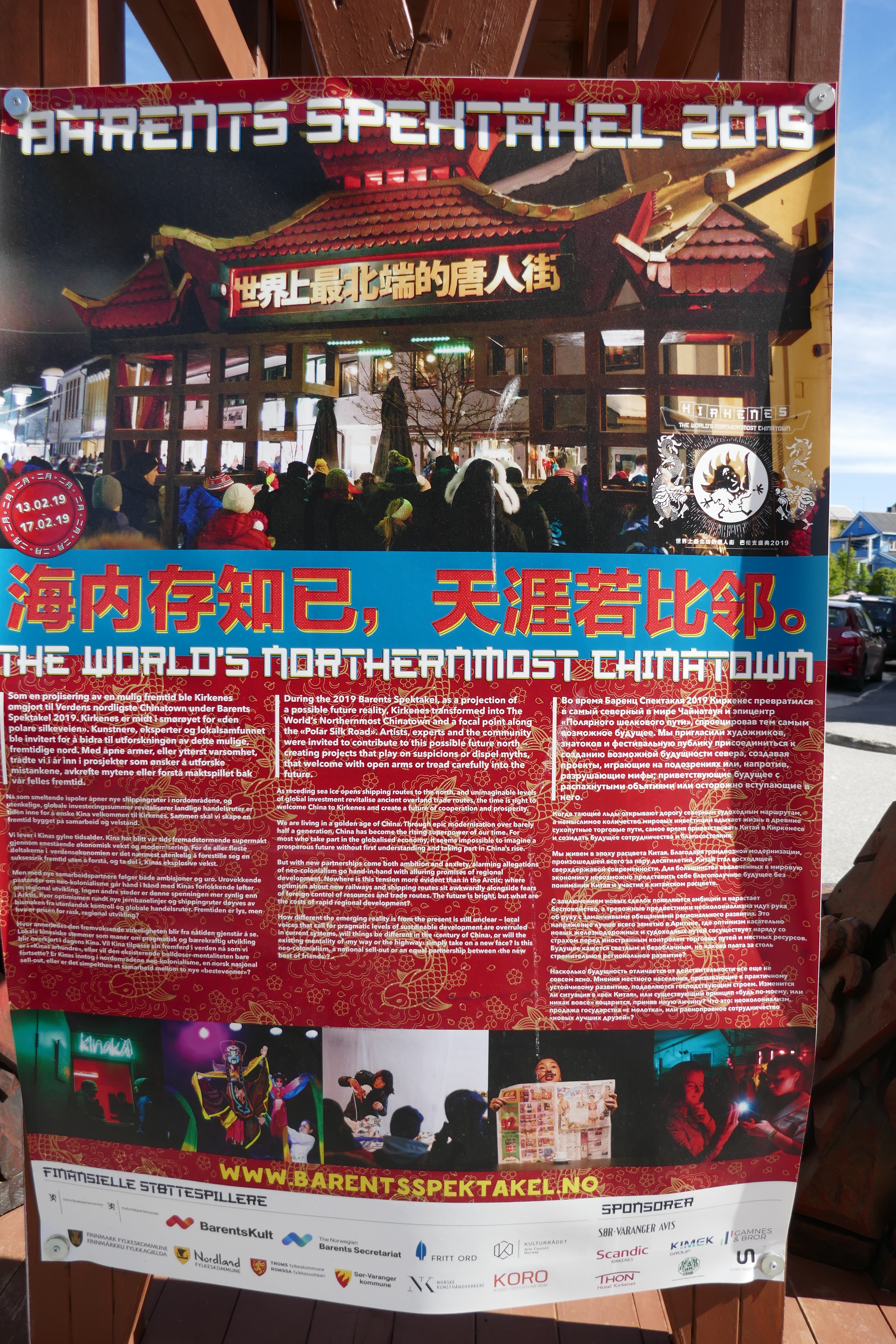
This little fishing port (population 3,500) in isolated Finnmark obviously engages in highly sophisticated municipal debate and has both a well-developed world view and excellent command of the English language. And, like northern Norwegians themselves, it’s straight-talking. It wasn’t the first time I’d made inaccurate assumptions about life in the isolated Norwegian fjords, but it was certainly a salutary one.
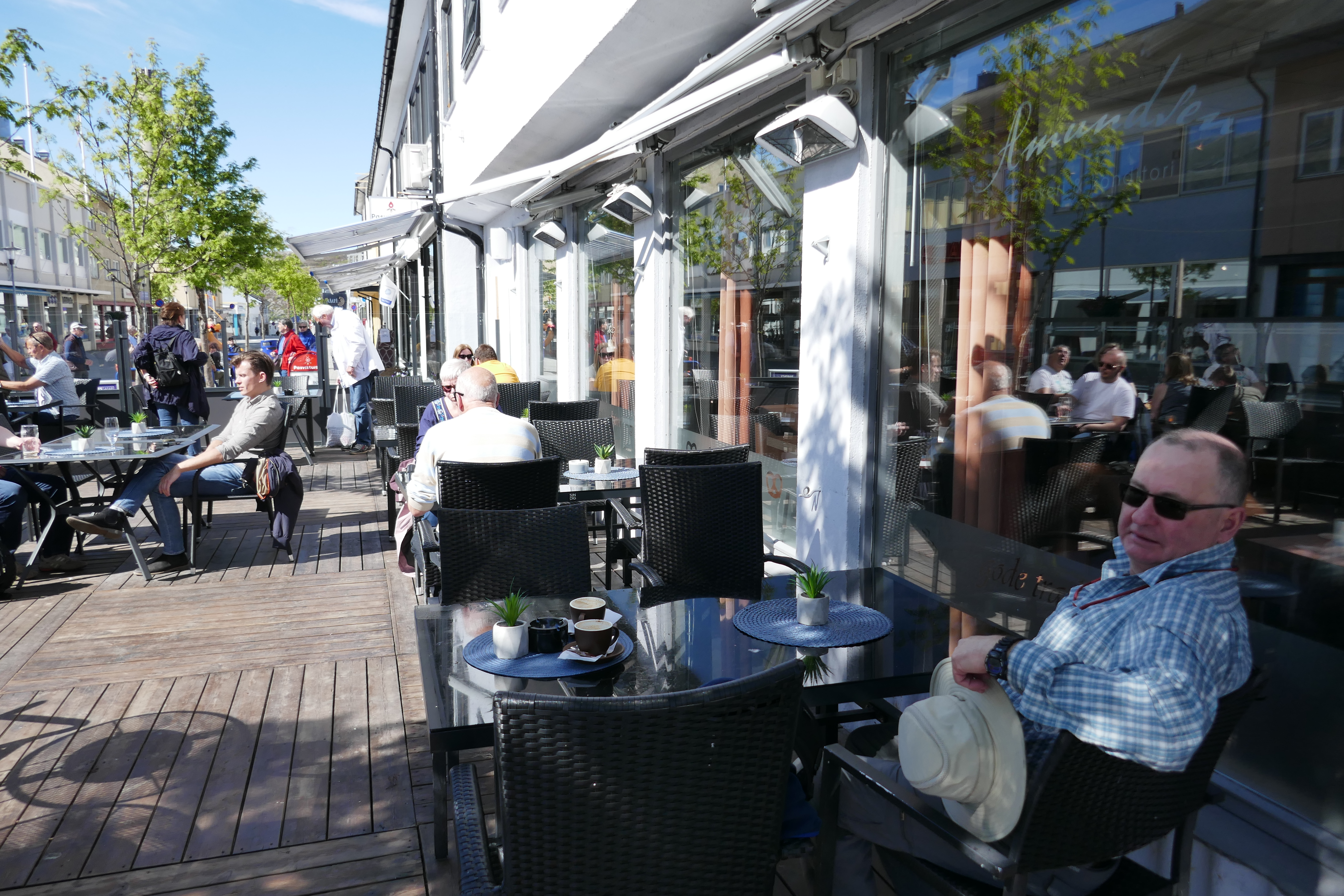
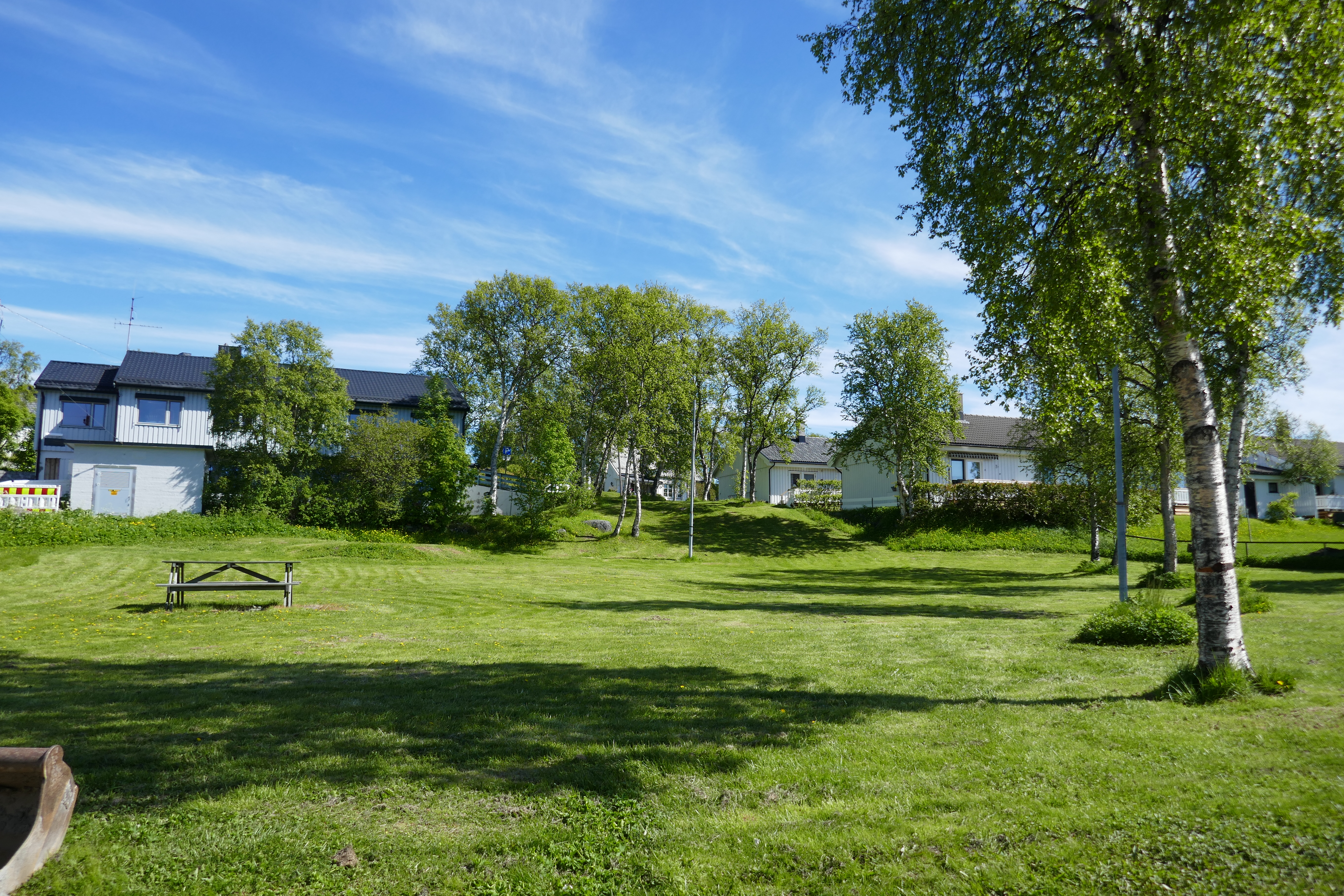
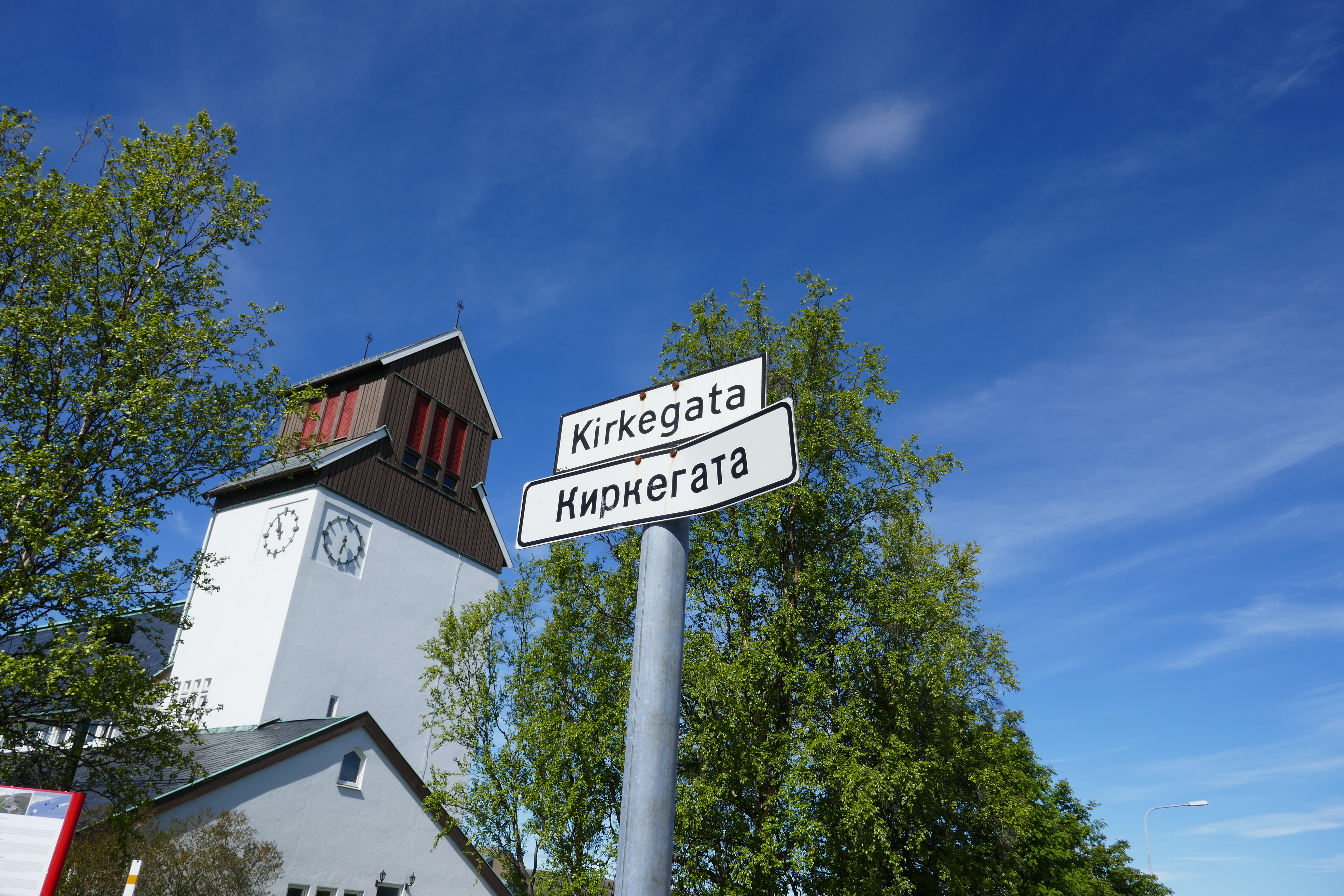
15kms from the Russian border and 40kms from the Russian naval base at Murmansk
Hurtigruten ferries run 24 hours a day, so whilst northbound we slept blissfully through many night-time ports of call (though the term ‘night-time’ is just rhetorical at this latitude!). On their southbound journeys, however, the ferries’ schedules are cleverly tweaked to give you time during more sociable hours to dash ashore in places you missed on the way north. One such place was Hammerfest.
I’d read about the Nazi’s forced evacuations and torching of northern Norwegian towns and farms to slow the advancing Russian Red Army in 1944, but the real impact didn’t hit me until I visited the excellent little Gjenreisningsmuseet (Reconstruction Museum) in Hammerfest. Through northern Norway, 75,000 people were force-evacuated south to Tromso and their towns and farmsteads torched, boats burned and animals slaughtered.
In Hammerfest, nothing remained except a small wooden chapel. 25,000 local people escaped evacuation by living though the following winter near to starvation in nearby caves.
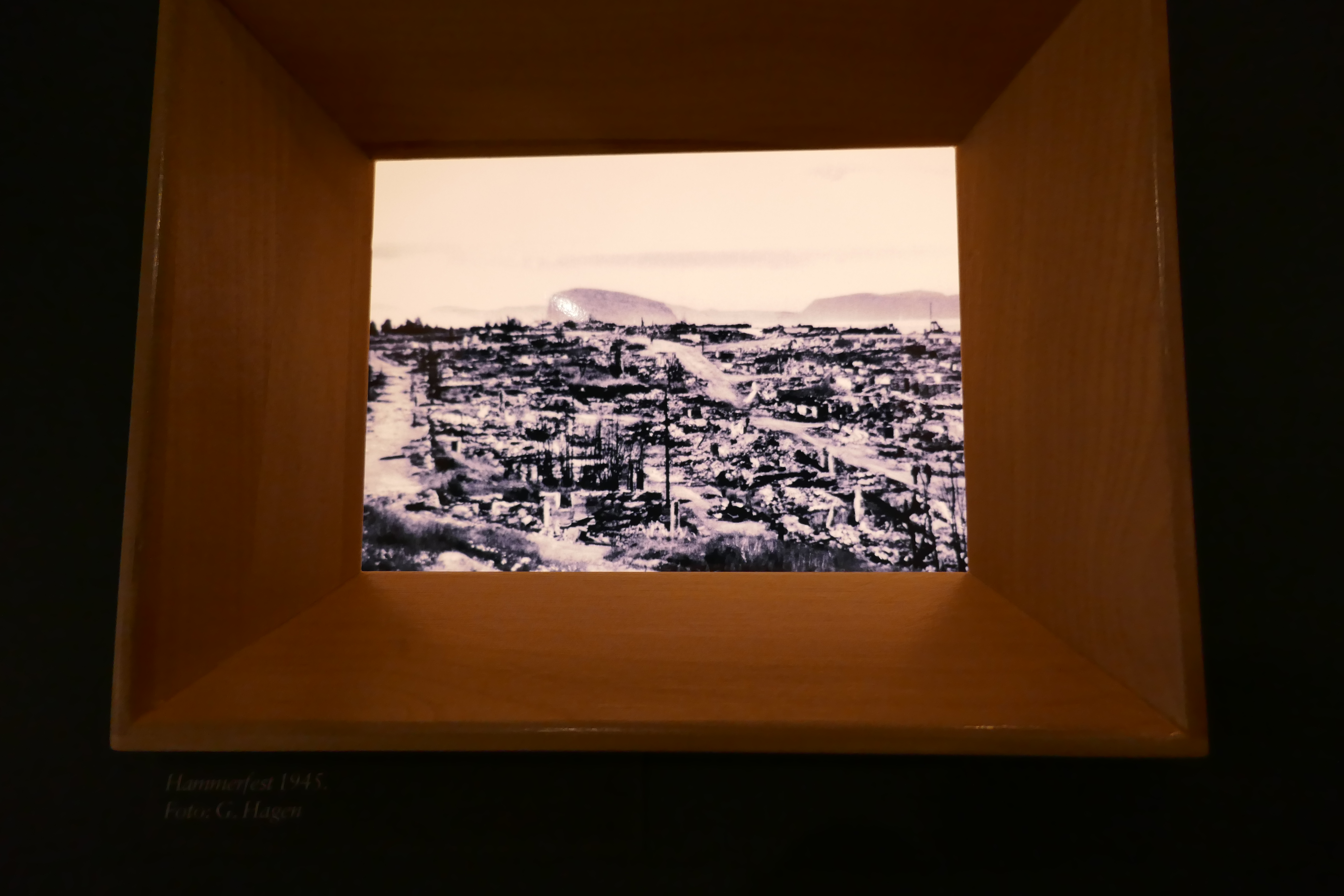
Norway’s collective memory of being occupied in WWII is alive and kicking, and I wonder how German visitors cope with it. Around 60% of our ship’s passengers are German, about 20% American, and then there’s the rest of us – Norwegians, for whom the ferries are a long-distance bus route, other European nationalities, and a smattering of Aussies.
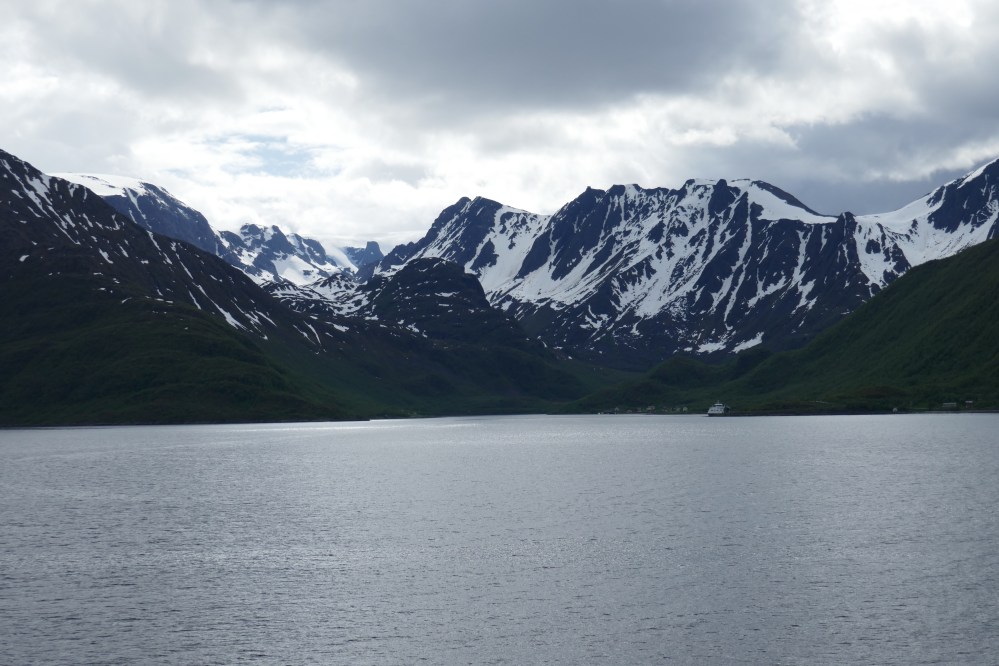
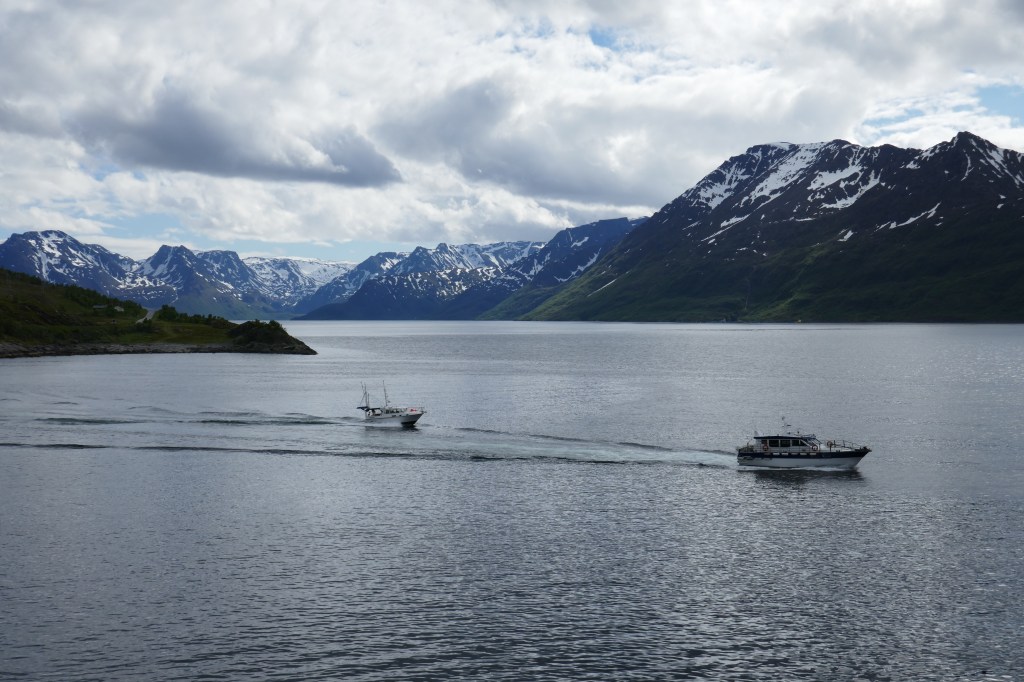
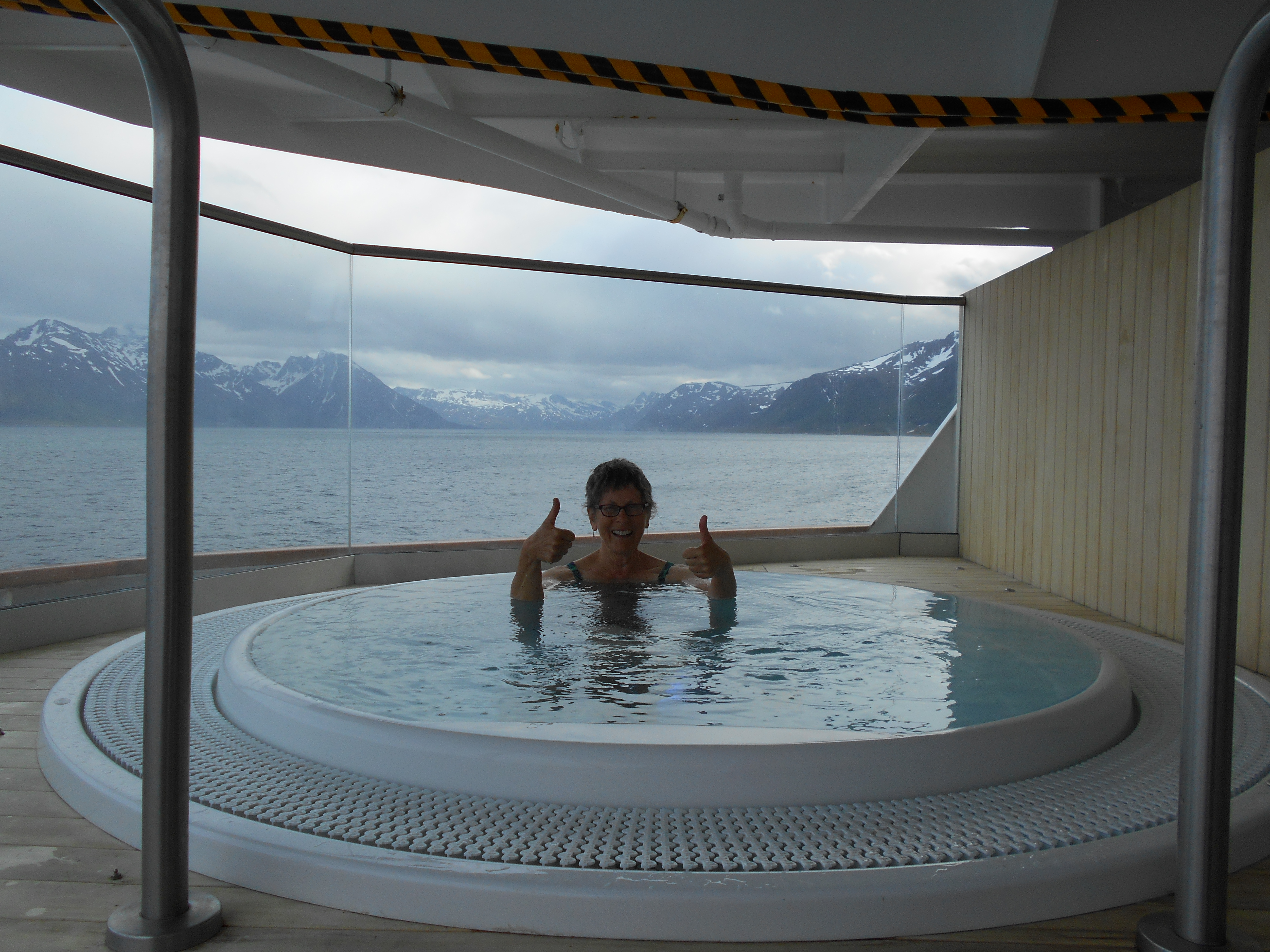
 Europe 2019
The water looks warm, not the ocean, the Jacuzzi. 🙂
LikeLiked by 1 person
Whoops, wrong account
LikeLiked by 1 person
Knew it was you, Deb xx
LikeLike